The Challenge
Oral culture is fragile. The stories, teachings, and language that hold Ermineskin's identity live in the memories of a generation of Elders and knowledge keepers — and with each passing year, the window to capture them narrows. Layered on top of that: the history of Indigenous peoples in Canada has largely been told by outsiders, in ways that flattened or erased it. The belief that needed to shift was that this history deserves to be preserved permanently and on the Nation's own terms — not commemorated once, but built into a lasting teaching tool the community owns and controls.
The Insight
A people's history carries the most weight when it's told in their own voices, in their own language, by the Elders who lived it — to the children who will carry it next. Culture survives and develops through meaningful human exchange.
The Idea
We structured the series as past, present, and future — a three-act arc that mirrors how Ermineskin understands continuity, where the future is inseparable from what came before. With each episode rooted in its Cree title, Indigenous voices are centered and the community leads the storytelling rather than sits as its subject. We gave each chapter the space of a feature-length film, and let Grammy-nominated Northern Cree carry the cultural and emotional register throughout.
The Work
Three feature-length documentaries produced with Ermineskin Cree Nation, one of four nations at Maskwacis:
- pecinawây (past) brings Elders and community leaders together to tell the oral history of one of Canada's largest Cree Nations — from a turbulent past to the cultural practices that still remain a foundation of the community.
- Mekwac (present) follows an Indigenous-led team of archeologists and Elders across the western prairies and Rocky Mountains to teepee circles, medicine wheels, and constellations, documenting the physical record and the consultation work to protect these sites.
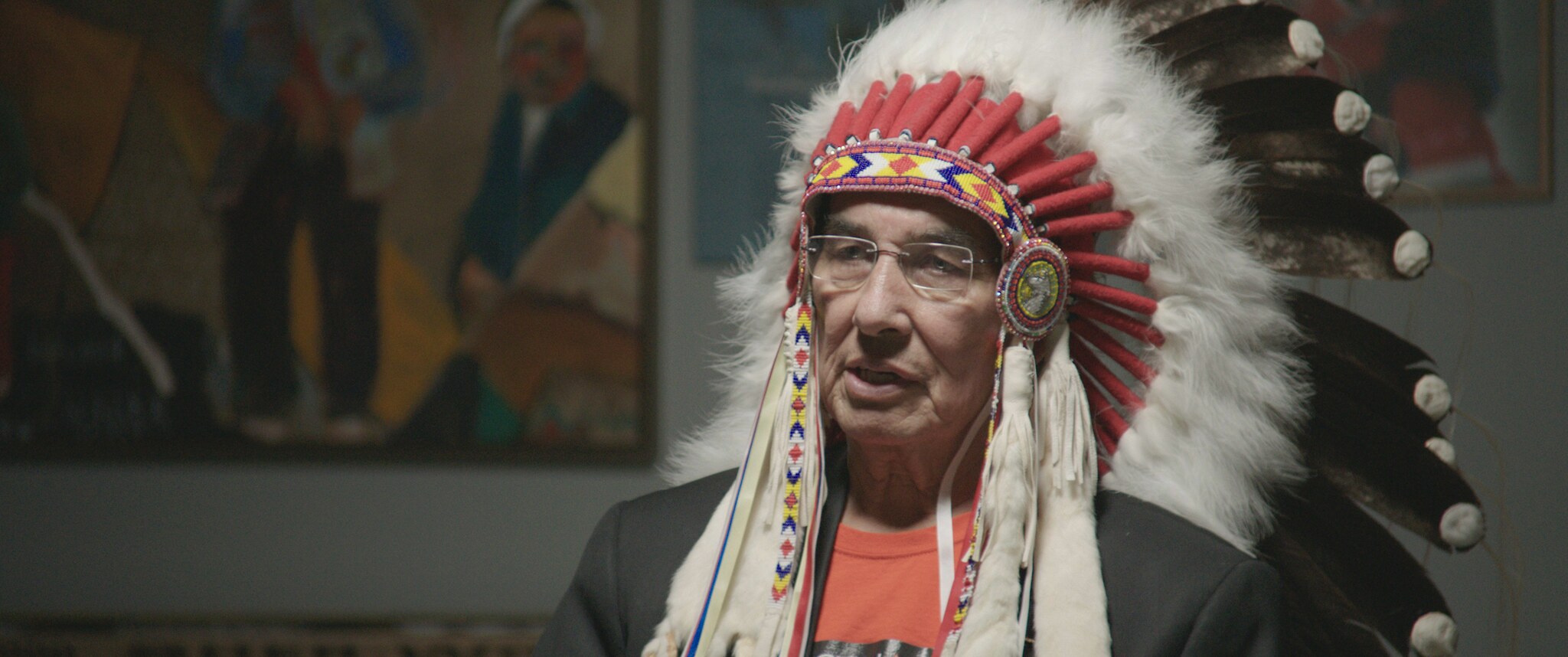
- ohte nikahn kespâyo (future) profiles Dr. Wilton Littlechild — residential school survivor, former Member of Parliament, Treaty 6 Grand Chief, UN Delegate, and Ermineskin Elder — tracing an arc from residential school to the United Nations Declaration on the Rights of Indigenous Peoples.
The Result
A full-length film series to educate and inspire the significance of spoken history.